Calls for a National Investment Bank are growing. Such a bank could inject 100 billion euros into the Dutch economy. But the Netherlands is already awash with banks; what it lacks are venture investments. Plus: eight alternatives that would be more effective.
Forget the polarization everyone’s talking about. The Dutch “polder” is alive and well; everyone is in perfect agreement—from the PVV to university professors, from labor unions to billionaires. The Netherlands needs a National Investment Bank. Or, to be more precise, a “national investment and innovation bank” (because that sounds nicer). If that consensus manages to find its way into the election platforms of enough political parties in the coming months, then it’s practically a done deal. Do we want an Investment Bank? Then we’ll get an Investment Bank!
This astonishingly poorly thought-out plan has become wildly popular in just a few months. But what does the plan actually entail? And is it really wise for us to focus our efforts on it?
Where did this idea come from?
The ball started rolling when FME, the trade association for the technology industry, presented an 11-point plan in early February to get the industry back on track. With prominent companies such as ASML, Tata Steel, Philips, and DAF, the association enjoys a great deal of goodwill in the Netherlands.
In making its recommendations, the FME drew, among other things, on a well-received report written last year by Mario Draghi, the former president of the European Central Bank. According to Draghi, Europe needed to invest 800 billion euros in the economy, which, according to the FME, would amount to about 10 billion euros for the Netherlands.
FME leader Henrar (formerly of Tata), known for speaking his mind, took it a step further. In an interview with NRC regarding the FME plan, he advocated for a national investment bank, similar to those in Germany (KfW) and France (Bpifrance). That way, you can create a flywheel effect.
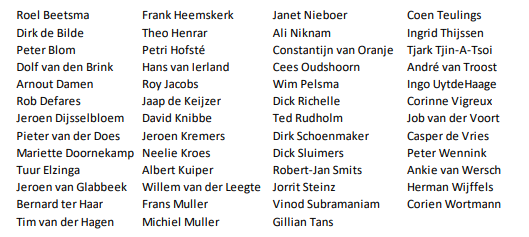
This is because a bank can not only lend its own money, but also attract funds from others, such as savers and bond investors. A few veterans from the polder further developed that idea into a six-page plan. And they collected 51 signatures in support of it.
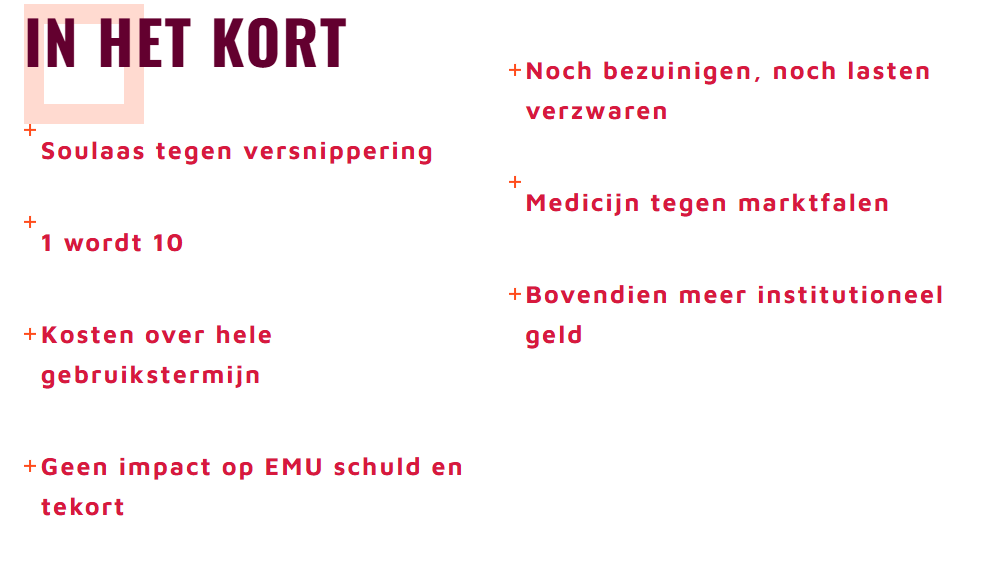
Because, as the National Investment Bank’s website summarizes “in a nutshell”: “1 becomes 10.” As a government, you put 1 billion into the bank as a buffer, and with that, you can raise 9 billion in loans from, say, pension funds. That gives you 10 billion euros. And if the government puts in“roughly 10–12 billion,” as they want, then you can turn that into as much as 100 billion euros.
Not only that, but this amount also seems to have fallen from the sky. We don't have to raise taxes or cut spending to get it, and it won't increase the national debt. Who wouldn't want that?
The House of Representatives was quickly persuaded. CDA leader Henri Bontenbal and Volt leader Laurens Dassen submitted a motion in May to explore how the existing Invest-NL could be transformed into such a National Investment Bank. And, of course, they garnered significant support from their colleagues: 143 of the 150 members of the House voted in favor. Only a few parties that are immune to social consensus, such as Forum and the Party for the Animals, voted against it.
We don't have too few banks—we have too many
In the coming period, political parties will be fine-tuning their election platforms and the financial plans behind them. Undoubtedly, this “free money” from Henrar and company will play a prominent role in that. After all, there aren’t that many windfalls anymore now that the economy is suffering from a trade war and billions more “must” be allocated to defense.
But in doing so, the Netherlands is heading down a dangerous path.
This article is for paid members only
To continue reading this article, upgrade your account to get full access.
Subscribe NowAlready have an account? Sign In