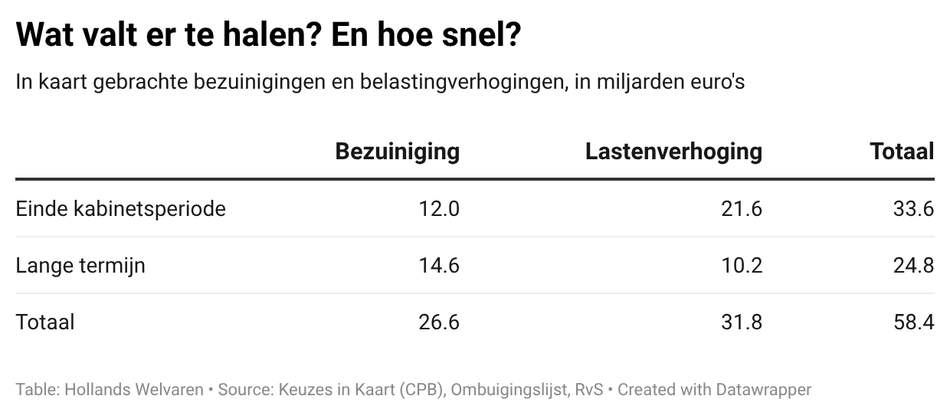
Politicians have forgotten how to cut spending. As a result, not only is the government getting bigger, but healthcare and Social Security are increasingly crowding out investment in the future. It is therefore time for a major reform program. But how do you turn the tide? Here are a few principles and proposals for cutting tens of billions in spending.
This story is a follow-up to New Fiscal Contract - This Is What the Netherlands Really Needs. That story describes how the government is getting bigger and bigger, but at the same time investing less and less. Despite all the fine words, not a single political party dares to do anything about it. With an ambitious reform and austerity program worth 50 billion euros, you can turn the tide. The story you are about to read offers concrete suggestions for changing that.
My goodness, there sure are a lot of new civil servants (or asylum seekers). If we could just cut back on that, we could lower taxes.
The healthcare system has been ruined by budget cuts. If unethical companies (or the wealthy) would just pay their fair share of taxes, we could fix that.
Does this sound familiar? These are the rhetorical weapons the left and right have been using to attack each other from their respective trenches for years. The problem is that neither side is right.
Those who say that can pretend they’re right and that everything will be fine as long as someone else foot the bill: laid-off civil servants, asylum seekers left to languish in war-torn countries, villa owners, major polluters.
But the truth is more like that old SIRE campaign: society is you.
The government—that’s us.
Of the 499 billion euros the government spent in 2024, nearly half (236 billion) was returned to citizens as “social benefits,” according to figures from Statistics Netherlands. These include not only “traditional” benefits such as welfare and the AOW pension. But also all kinds of allowances and (nearly) free services in kind that the government provides to citizens, such as healthcare and education. What isn’t even included in that 236 billion are subsidies for items like heat pumps, or the billions in compensation for Box 3, which are also paid directly to citizens. That’s on top of that.
And of course, the number of civil servants has increased and could certainly be scaled back a bit. But the other half of government spending goes mainly toward public services, such as law enforcement, the military, and roads. Let’s just say: right-wing pet projects.
Anyone who realizes this immediately sees how painful government spending cuts are. It’s almost impossible to go through them without it affecting you personally. Yet it’s necessary, because the government has grown significantly in recent years. We did end up with the big government we secretly wanted, but we didn’t start paying the higher taxes that go along with it.
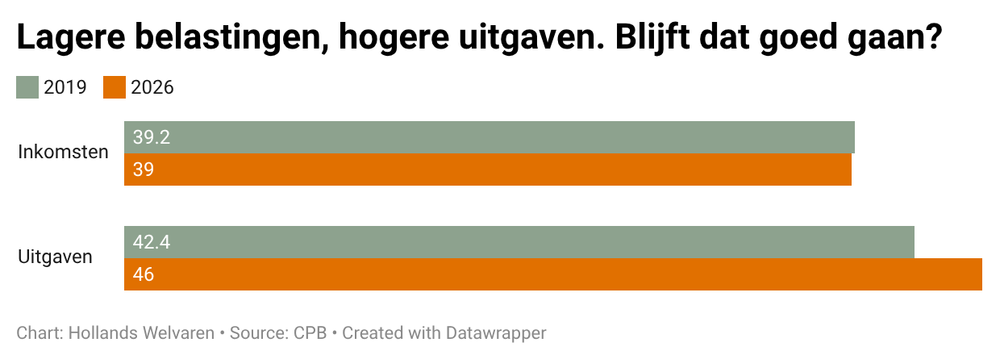
But how do you do that? The few austerity measures that the Jetten minority cabinet wants to implement (raising the retirement age and introducing a deductible for healthcare) stand no chance without a majority in the House of Representatives.
This is partly because there is no overarching narrative on austerity and reform. Political parties have been too busy blaming each other to invest in such a narrative. In short, that would be:
Citizens need to become more self-reliant so that the government can once again invest in our future.
This also immediately establishes a few "rules of the game":
This article is for paid members only
To continue reading this article, upgrade your account to get full access.
Subscribe NowAlready have an account? Sign In