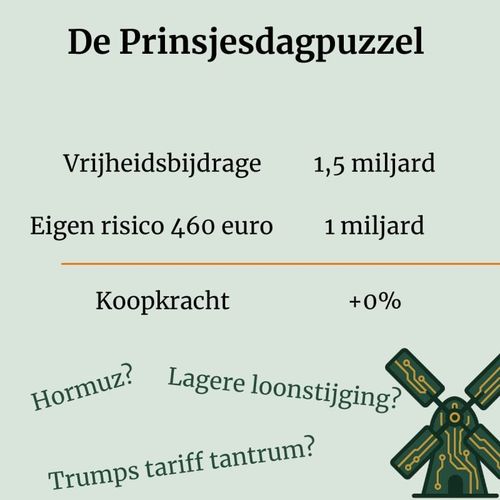
The coalition has balanced its budget by skimming off virtually all of citizens’ gains in purchasing power over the coming years. But if economic headwinds set in—for example, due to the Hormuz crisis—that could easily turn into adecline in purchasing power. Are the 2.5 billion euros that the “freedom contribution” and the higher deductible are expected to generate next year politically tenable?
Things aren't going well for Rob Jetten. A month after he took office as energy minister in 2022, Russia invaded Ukraine. And less than a week after he became prime minister, the United States and Israel attacked Iran, prompting the latter to block the Strait of Hormuz. Yet another energy crisis.
But when the coalition parties were negotiating the budget, that crisis was not yet foreseeable. The economic situation was still somewhat stable. But even then, it was difficult to finance all the priorities (defense, climate, nitrogen, education).
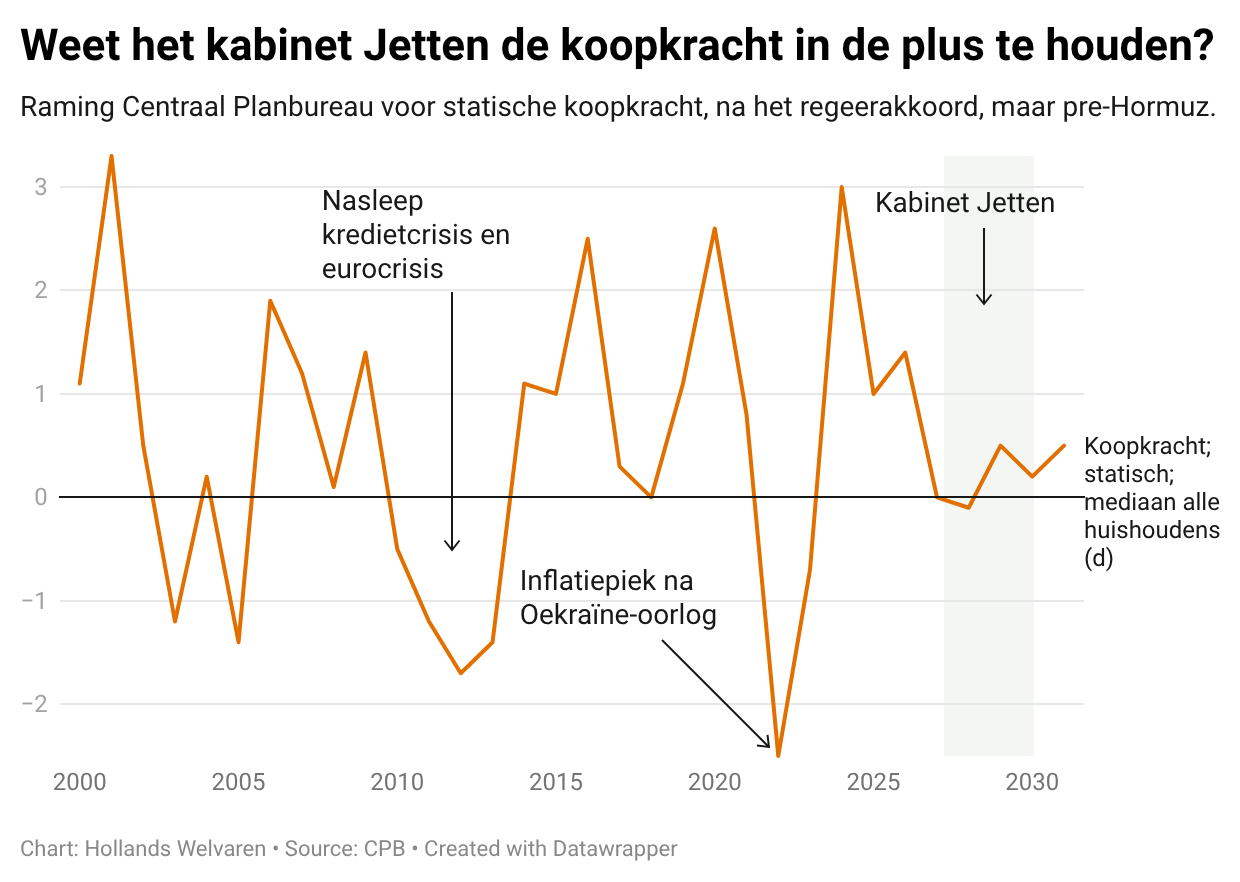
Fortunately, the coalition saw a way out. In the coming years, wages would rise faster than inflation, meaning purchasing power would increase. On average, by 0.6% per year, according to calculations by the Netherlands Bureau for Economic Policy Analysis (CPB).
But the government skimmed off virtually all of that growth. The “freedom contribution” (effectively a higher payroll tax) of 1.5 billion and the increase in the deductible to (probably) 460 euros—amounting to 1 billion euros—mean that purchasing power will not rise next year but will remain the same.
This article is for paid members only
To continue reading this article, upgrade your account to get full access.
Subscribe NowAlready have an account? Sign In