The revenue model for Dutch journalism is dead. The print newspaper subscriptions of baby boomers effectively serve as a kind of trust fund for the industry, providing a steady stream of income each year, but also fostering complacency within the industry. Eventually, that source of income will dry up, and large newsrooms will no longer be financially viable. What will replace it?
People have been predicting the demise of the print newspaper for years. And yet, it’s still here. In a way, newspapers even seem more vibrant than ever. They have a much stronger online presence, with podcasts, attractive visuals, and clever social media posts. As a result, more and more people are taking out digital subscriptions to newspapers. The years-long downsizing of newsrooms seems to be coming to an end, and there are still plenty of newsrooms with more than 100 journalists on staff.
But appearances can be deceiving. The newspapers are already stuck knee-deep in quicksand.
Is it a bad thing if journalism disappears?
Publishers of print newspapers and magazines remain a crucial link in society’s information supply. They employ some 3,400 journalists who handle the bulk of newsgathering in the Netherlands (by comparison, NOS News employs 462 people).
Two publishing groups dominate the newspaper industry. The market leader is DPG, which publishes *de Volkskrant*, *het AD*, *Trouw*, and *het Parool*. Mediahuis is the second-largest, with titles such as *De Telegraaf* and *NRC*.
Last year , all publishing companies in the Netherlands collectively earned 1.2 billion euros. When you factor in inflation, that’s more than a 50 percent drop over the past twenty years. That’s a massive blow. The fact that newspaper companies are still in business is largely because (especially older) readers remain very attached to their print newspapers. As a result, they’ve been able to raise prices significantly. In recent years, the price of a newspaper has risen twice as fast as that of other products.
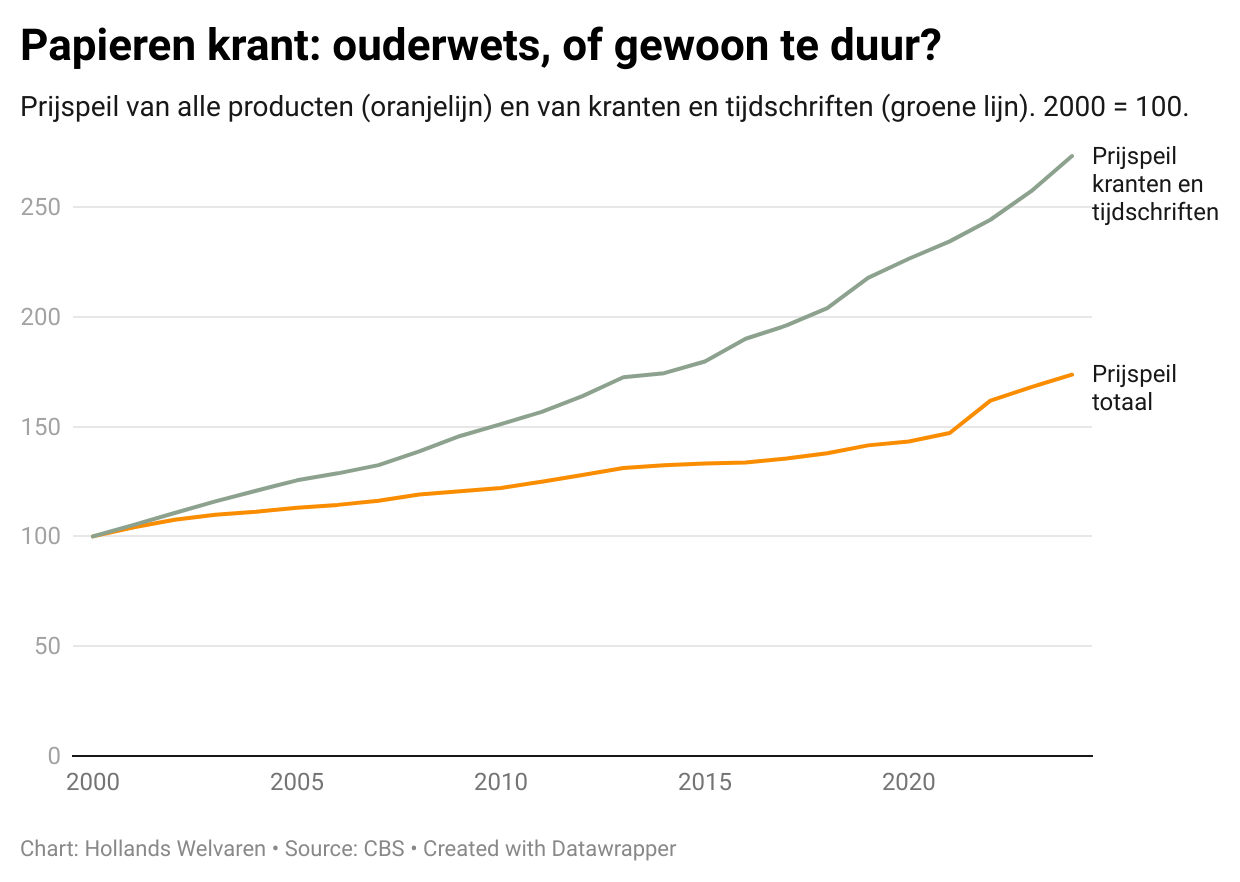
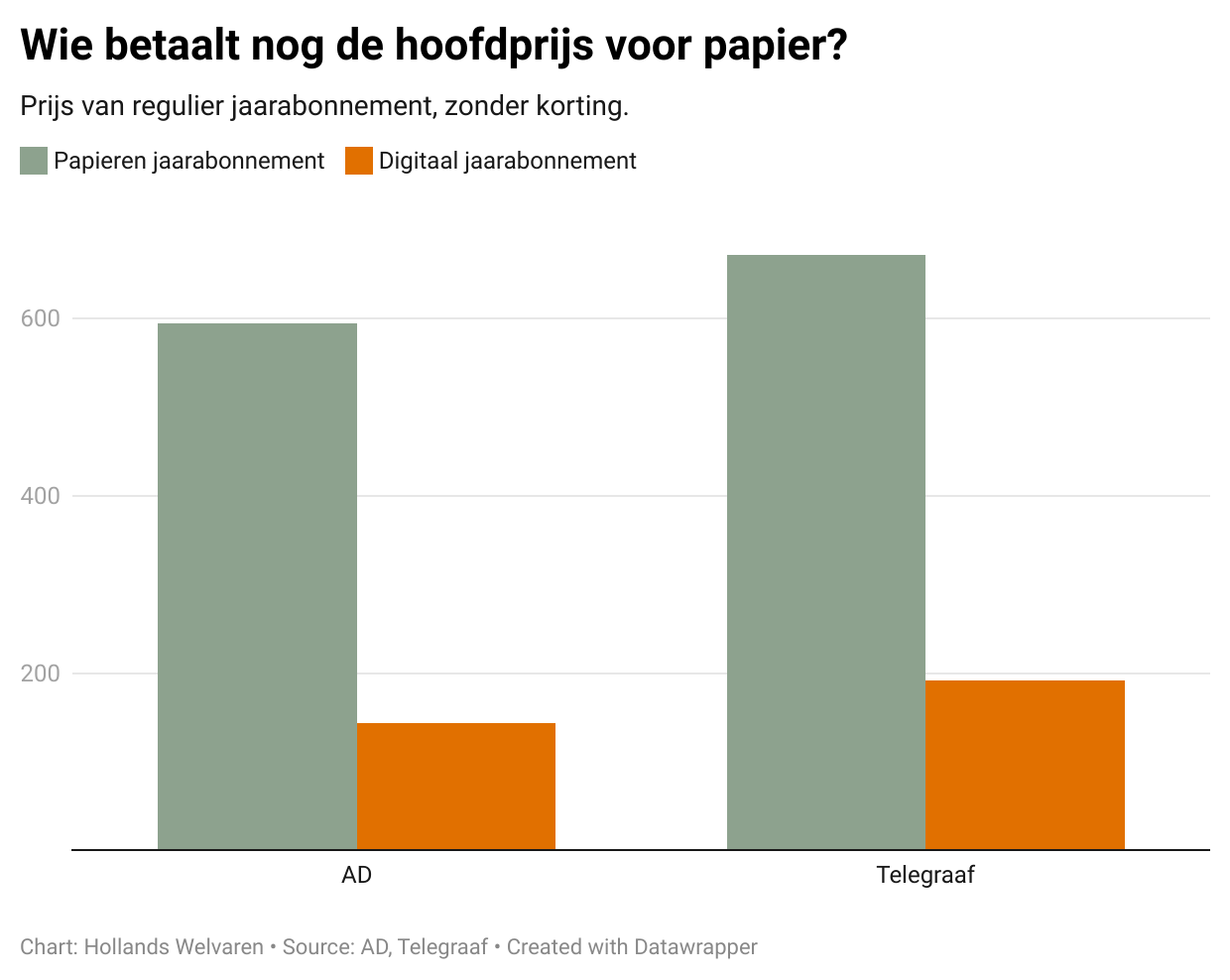
This provides additional revenue for the publishers, but it also raises the barrier to entry for new subscribers. A subscription to one of the country’s two largest newspapers—not even the most elite ones—already costs around 600 euros a year.
And yet the reader—who spends all day on his or her phone anyway—can consume that exact same content digitally as well. For just a quarter of the price.
That immediately highlights the problem. While the number of digital subscribers is growing rapidly, the revenue publishers generate from those subscriptions is much lower. Of the 1.2 billion euros in revenue, more than 900 million euros comes from print subscriptions and print advertisements, according to calculations based on figures from the industry association NDP.
Too much dead weight
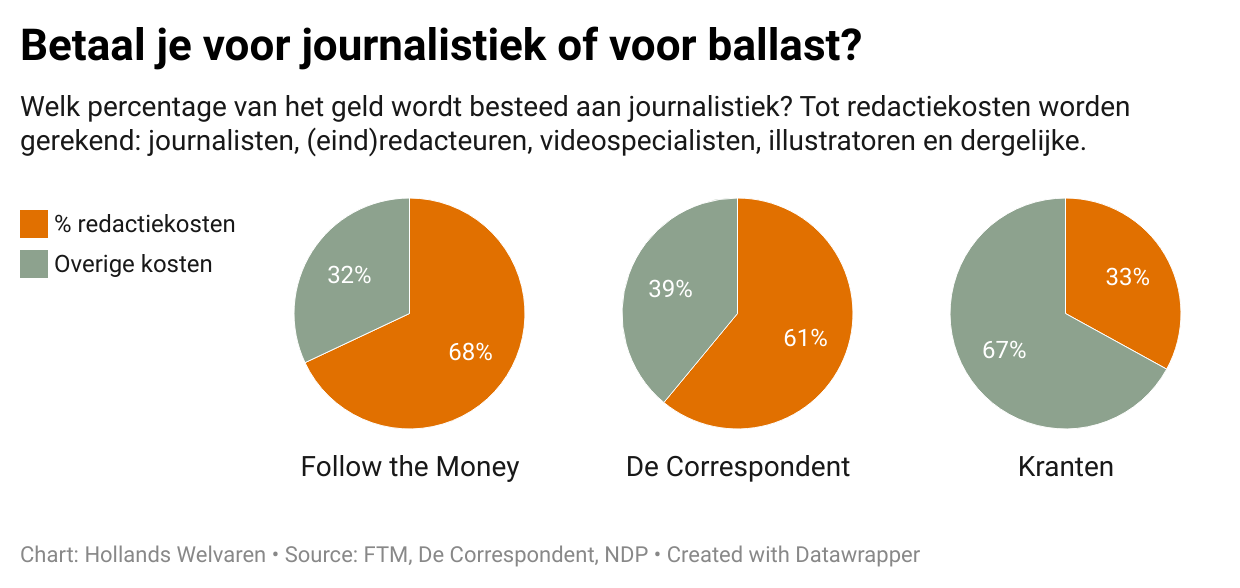
If publishers had to rely solely on digital revenue, they would never be able to maintain such large editorial staffs. On top of that, publishers don’t just employ journalists—they also employ a great many other people. People who, for example, sell ads, handle marketing, or print the newspapers. Only one-third of what readers pay for their newspaper actually goes toward journalism. With online competitors, readers get roughly twice as much journalism for their money.
In other words: print newspaper companies not only earn much less online, but they are also twice as expensive as their online competitors.
Newspaper publishers themselves know that the outlook isn't rosy...
This article is for subscribers only
To continue reading this article, just register your email and we will send you access.
Subscribe NowAlready have an account? Sign In