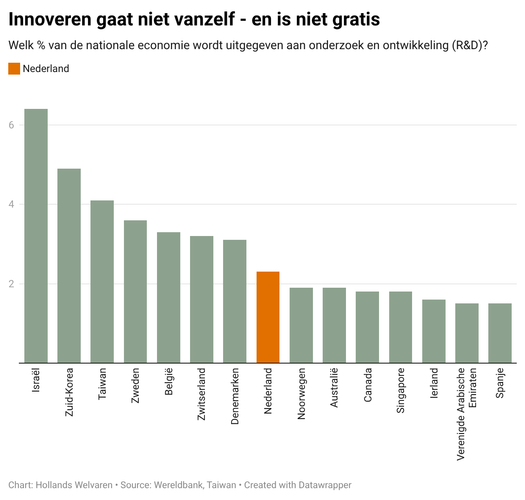
If you aren’t strong, you have to be smart. Now that the superpowers—the United States and China—are increasingly seeking to shape the world order to their own advantage, the “middle powers” are trying to join forces. The Netherlands is one such middle power. What can we learn from each other’s strengths and weaknesses to become stronger? Six notable similarities, differences, and lessons.
1: Don't underestimate the "napkin-as-tablecloth" countries
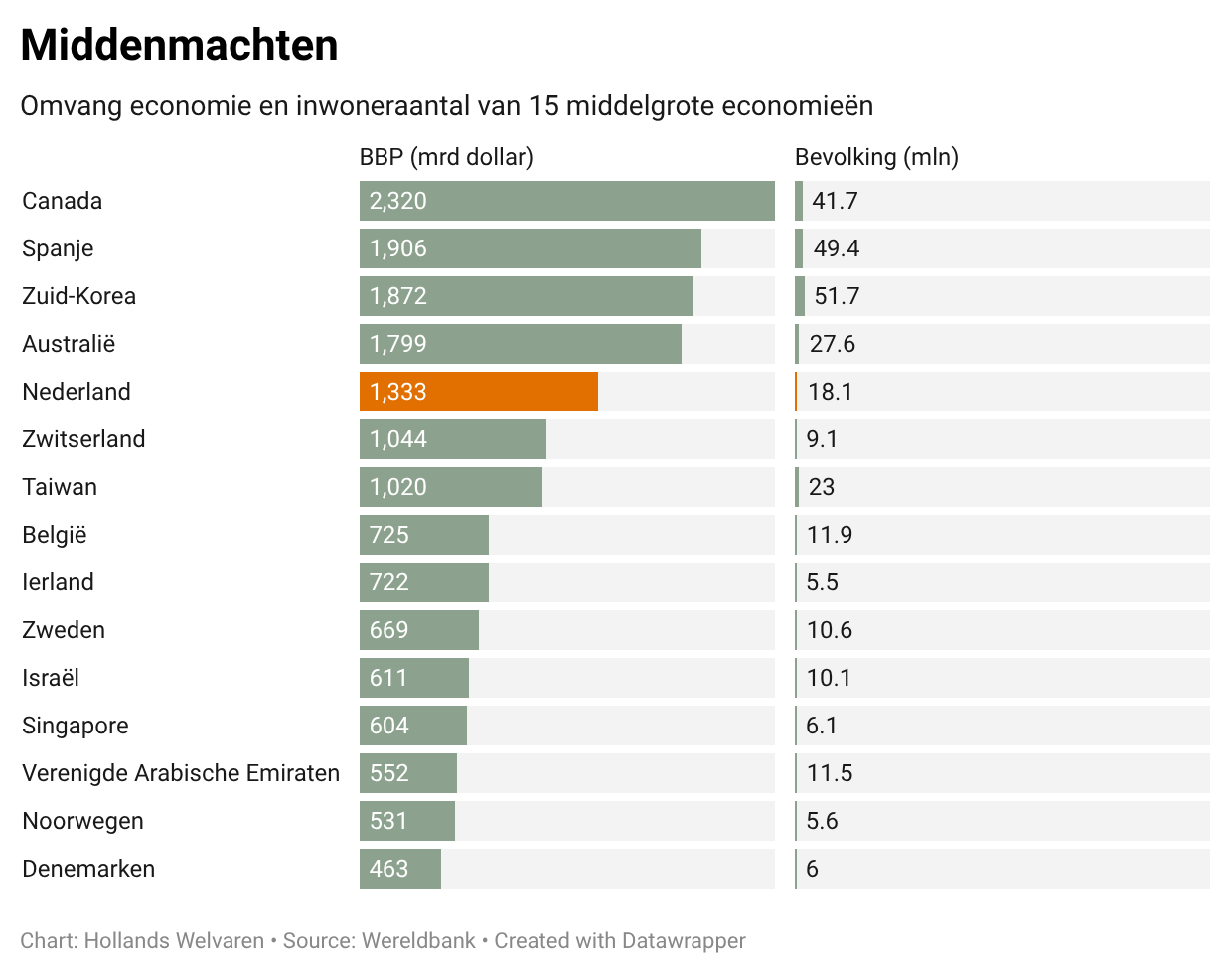
Earlier this year, Canadian Prime Minister Mark Carney introduced the term “middle powers.” There is no precise definition of middle powers, but Hollands Welvaren compiled various data on fifteen medium-sized economies characterized by relatively high incomes, open economies, and generally fairly open societies.
Canada may be much smaller than its southern neighbor, but on a global scale, Canada is anything but small. It is the world’s tenth-largest economy. And the Netherlands, with its 18 million inhabitants, is also the world’s 18th-largest economy.
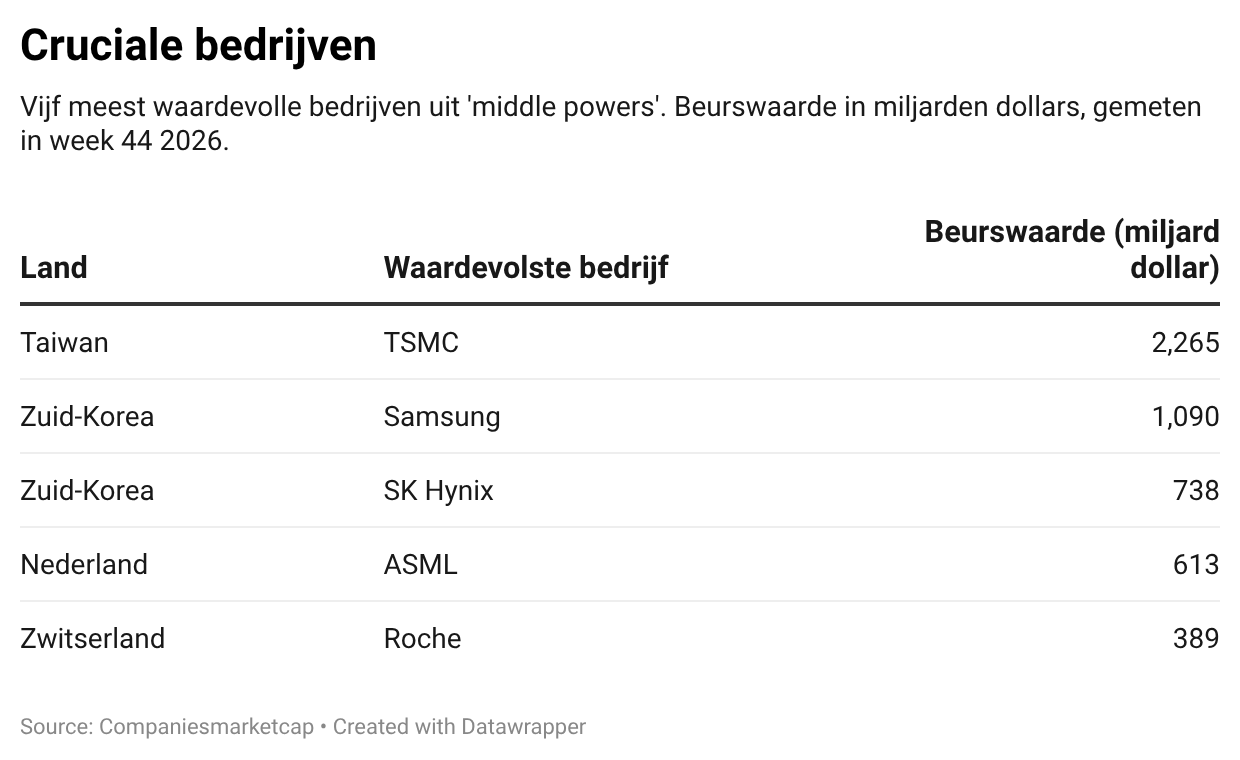
Although the AI race is primarily between the United States and China, and Big Tech is attracting a lot of attention, the middle powers are a crucial link. Without “our” ASML, Samsung, and TSMC, there would be no AI chips.
2: Vulnerability Is Inevitable
If you’re a small country that can produce such specialized equipment, you have no choice but to target the global market (ASML doesn’t sell a single EUV machine in the Netherlands). And since you don’t have hundreds of millions of citizens who want to buy foreign goods, there are few imports to offset that.
Consequently, nearly all of these middle powers have massive trade surpluses. That makes them, by definition, vulnerable to trade barriers such as those the United States is currently erecting.
Any country that wants to be wealthy will therefore have to accept this Achilles' heel.
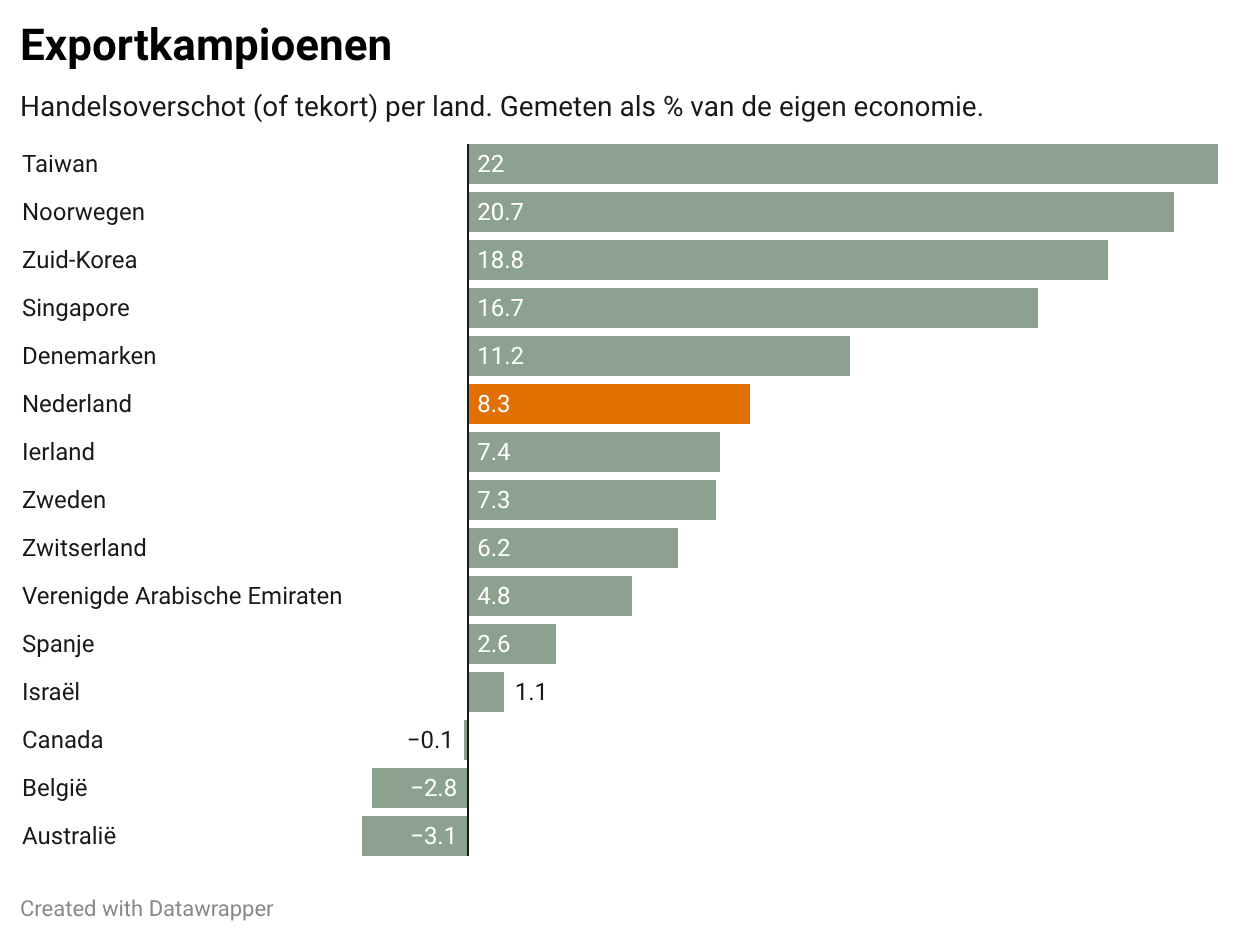
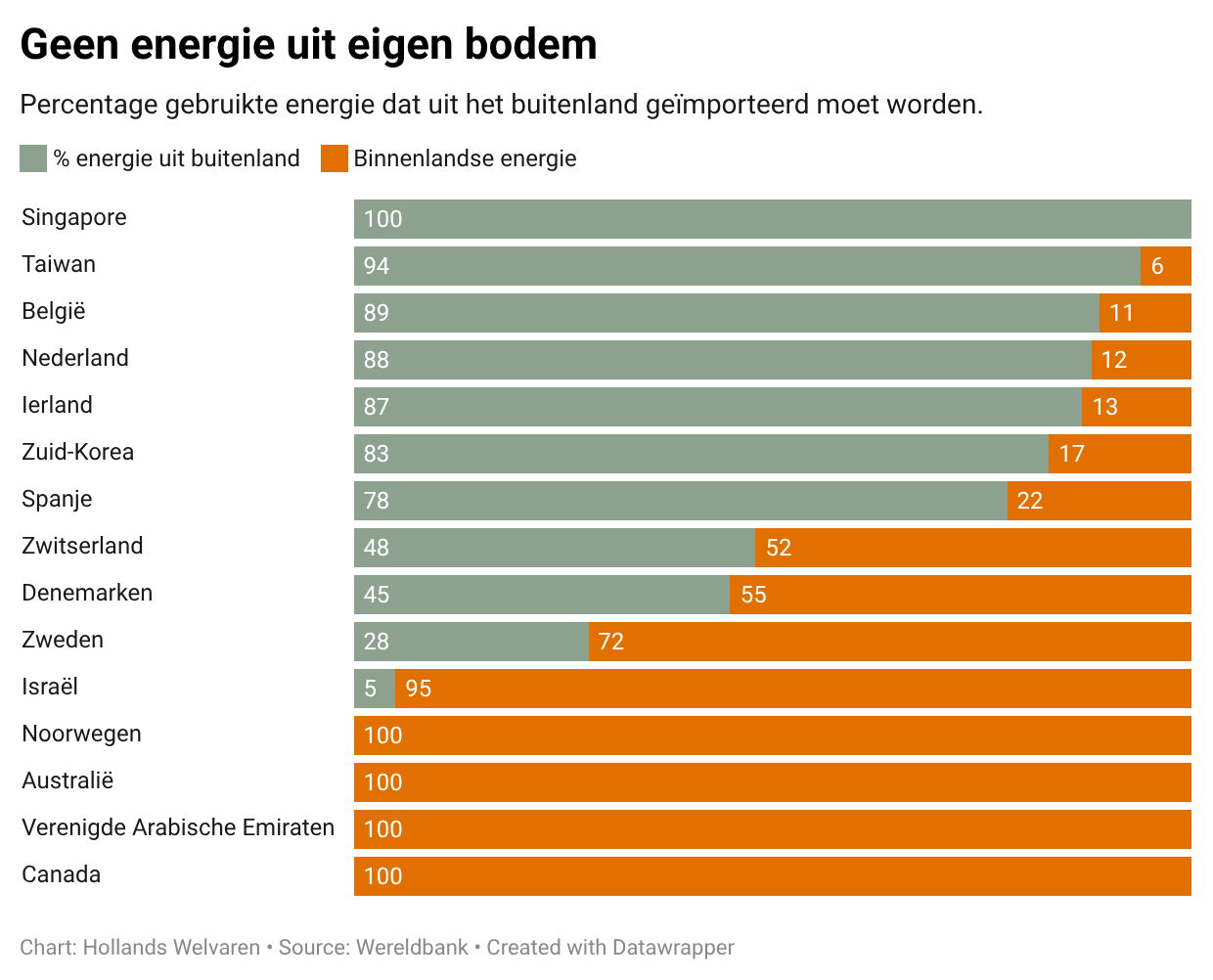
For countries that derive their wealth from the ground, such as Norway and the United Arab Emirates, the situation is different. But they are in the minority in this “club.” Most countries, on the other hand, have turned to innovation precisely because they lack natural resources (or prefer to deny that they have them, as the Netherlands does with the Groningen gas).
In the Dutch public debate, it often feels uncomfortable that we are so dependent on other countries for our energy. But that seems almost inevitable for high-tech middle powers. The situation is no different in South Korea and Ireland.
3: Middle Powers Can Thrive in a New World
This article is for paid members only
To continue reading this article, upgrade your account to get full access.
Subscribe NowAlready have an account? Sign In