What stood out amid the deluge of Prinsjesdag documents and the General Debate? 10 observations on the budget, a potentially even sharper decline in purchasing power, the Christian Union’s striking stance, and the many lobbying successes achieved by the business community.
Courting voters, raking the trough clean
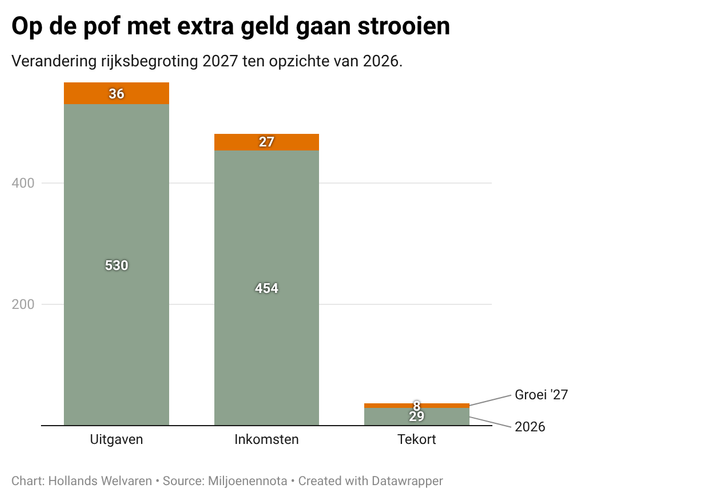
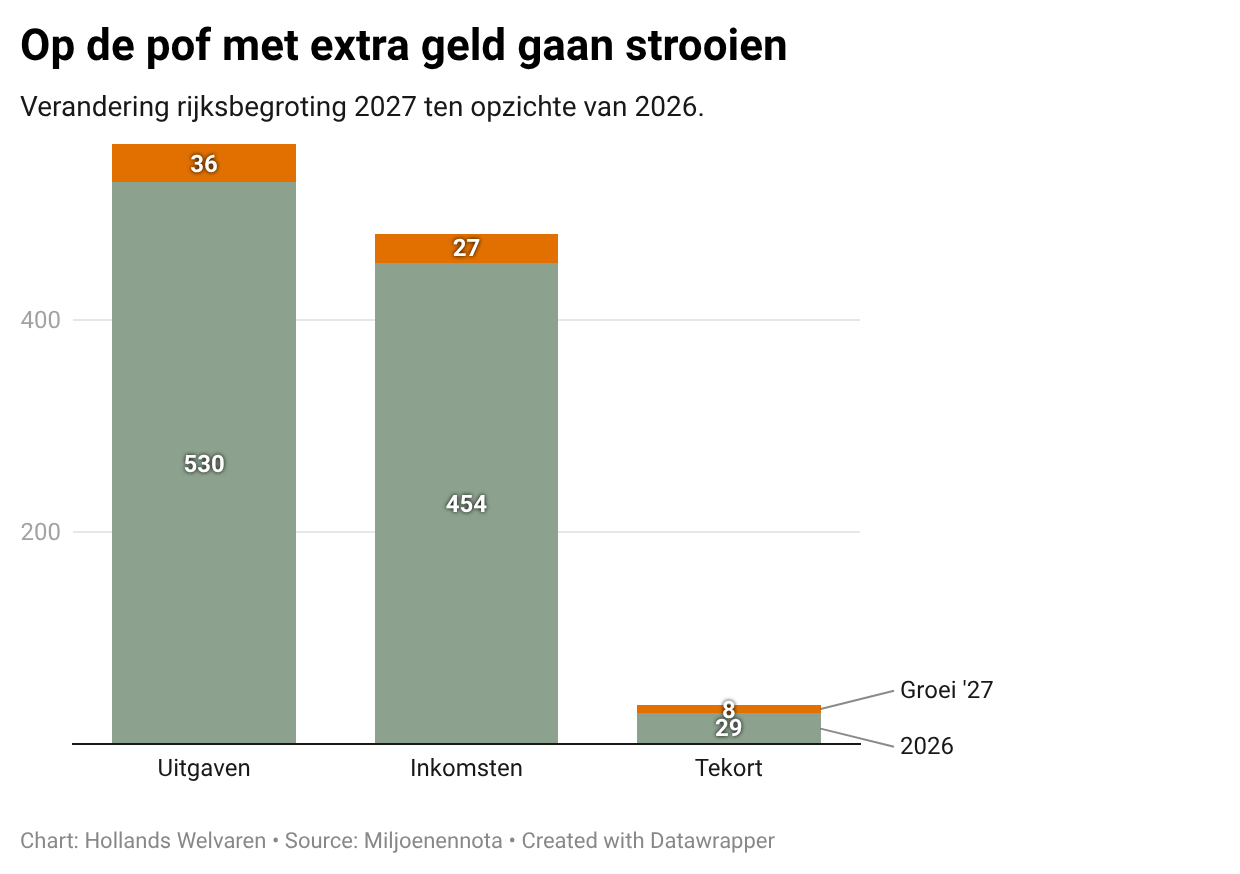
If we had to sum up next year’s federal budget (Mand!), I think it would go something like this: “We’re” going to spend 35 billion euros more next year (to win over voters). But we don’t dare raise taxes by that much (because voters would get angry). So we’ll just borrow 8 billion more (passing the buck).
Enjoying What You Eat
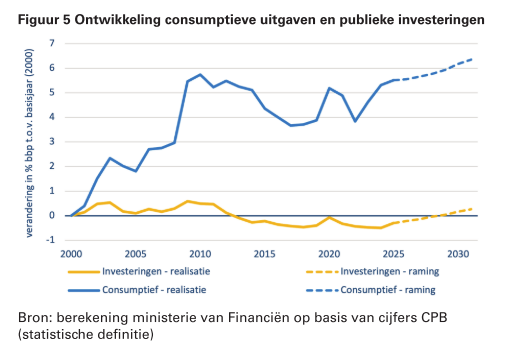
Could that extra money perhaps go toward investments? Toward things that improve our earning power, so we can easily pay back the additional debt later? Um… no. Our public investments have been roughly stable—or slightly declining—for years. Government spending is rising mainly because we’re consuming more, according to calculations by officials at the Ministry of Finance for this budget proposal.
Unacceptable
In this newsletter, I keep emphasizing—ad nauseam— that not a single active politician in The Hague has a serious plan for sound public finances. Aside from a few VVD youth members who have “gone off the rails” and a former PvdA minister who is no longer eligible for election, no one takes this seriously.
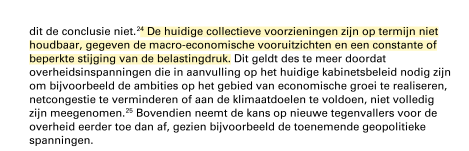
But now the Council of State is saying it too, albeit in convoluted language (they are, after all, sophisticated people). Our public services are “unsustainable.” So something really needs to be done. But politicians often ignore this High Council of State. On Prinsjesdag, for example, they also said it was“inappropriate” to make employers pay an additional 1.5 billion in disability insurance premiums next year to cover defense spending (their “contribution to freedom”). And yet, it’s happening anyway.
Oil Prices: The Achilles' Heel
Something strange is going to happen next year. According to the Netherlands Bureau for Economic Policy Analysis (CPB), wages will rise much faster next year (3.8%) than inflation (2.7%). Purchasing power should therefore increase. Yet it will actually decline slightly (-0.1%). This is due to the billions in tax increases the government plans to implement (primarily the “freedom contribution”).
That’s a dangerous strategy now that energy prices are so unpredictable. Without the tax hikes, people could have used their rising wages as a buffer to offset rising oil prices. But now the government has skimmed off that margin itself and pushed people to the very edge of their purchasing power.
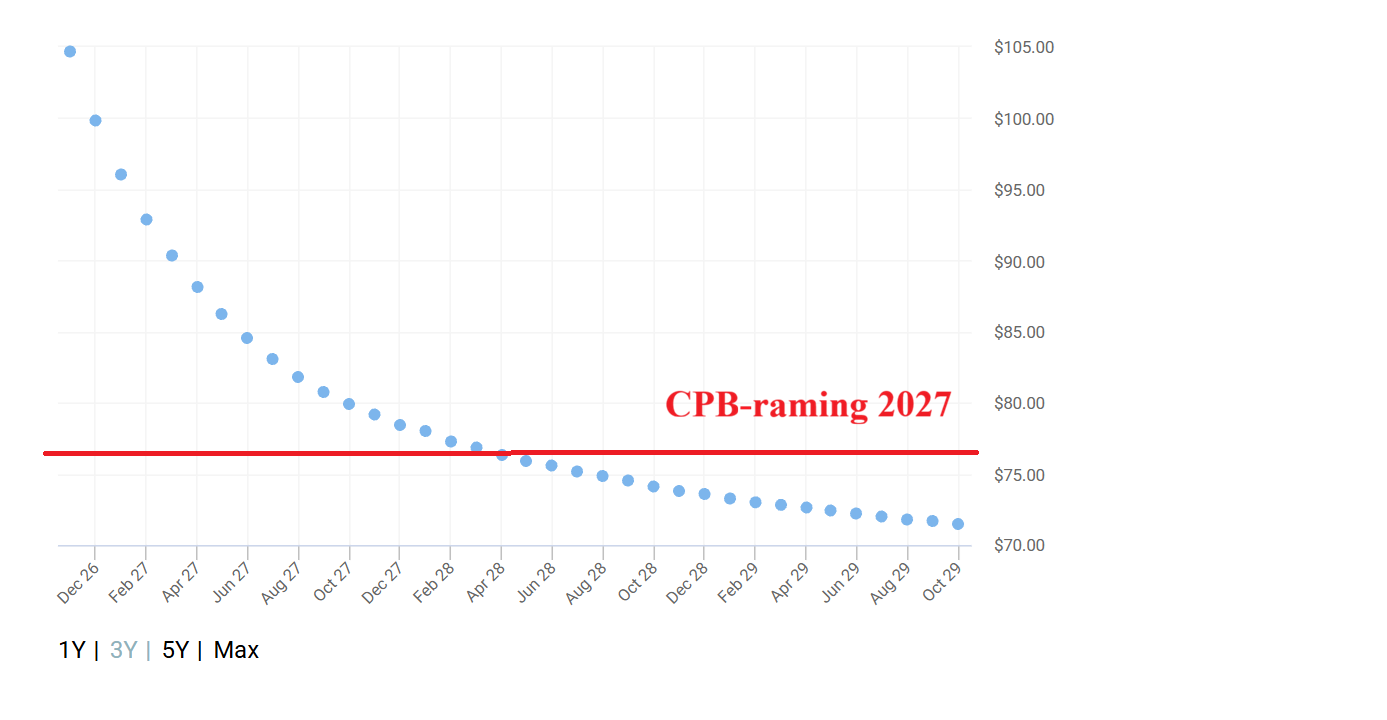
If energy prices continue to rise and people start to struggle, it won’t take long to find someone to blame. And there’s a good chance that will happen. That’s because the CPB based its “purchasing power projections” on an oil price of $77 per barrel for next year—the price the market was quoting at the end of July for barrels of oil to be delivered next year. But that price has since risen by about $10.
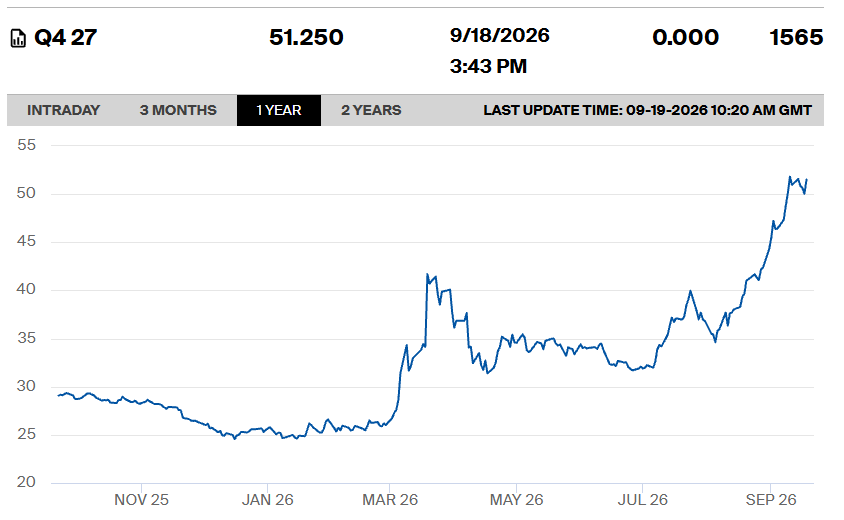
The wholesale price for one cubic meter of natural gas to be delivered at the end of next year (winter) was still 37 euro cents when the CPB made its calculations. Now it’s already 51 cents. Oil and gas prices will therefore have to fall significantly in the coming period if purchasing power is to remain stable next year.
Oil prices, future supply:
Gas Price, Fourth Quarter 2027 Delivery:
Keep an eye on the ChristenUnie
I’m not a big fan of following the Binnenhof, so maybe I’m off the mark. But I found the stance taken by ChristenUnie leader Mirjam Bikker during the General Debate striking. Jesse Klaver (PRO) and Joost Eerdmans (JA21) wanted to force the coalition to choose: go left or go right. By not choosing, Prime Minister Jetten is either playing a clever game of bluff poker, or he’s standing there as still as a rabbit in the headlights, until things go wrong.
Bikker paid no attention to that left-right conflict. She made it clear that she had one priority: to ease the burden of billions in tax increases on working people.
The time to address this will be during the debate on the Tax Plan in a few weeks. Bikkers’ fellow party member and tax whiz Pieter Grinwis was already able to secure enough support in the House last year to amend the 2026 Tax Plan.
Especially if Jetten, Klaver, and Eerdmans remain entrenched in their positions, I wouldn’t be surprised if Bikker and Grinwis soon take the initiative and manage to secure enough financial backing to ease the burden on citizens.
Who would dare oppose such a plan when the alternative is even heavier tax burdens—or new elections? Especially if you know the ins and outs of the budget world as well as Grinwis does, you’re bound to be able to find a few billion. For example, the Netherlands Bureau for Economic Policy Analysis (CPB) estimates that the government will likely be unable to cover 7.2 billion euros in planned spending next year. As a result, the CPB—which is known for its strict assessments—is less pessimistic about next year’s budget deficit than Minister Heinen himself. The minister is projecting a 2.9% budget deficit, while the CPB forecasts “only a 2.2% deficit.”
Companies: Off the hook—or are they?
This article is for paid members only
To continue reading this article, upgrade your account to get full access.
Subscribe NowAlready have an account? Sign In